
Knowledge base
Articles on production quality and efficiency, written in shop floor language, not textbook language.
Glossary
OEE, Cpk, SPC, FAI, 8D. Definition, formula, example.
Loss calculator
What one OEE percentage point costs per year.
DiGi instead of Excel and paper
What changes when inspection cards leave the floor.

Quality control
Metalworking
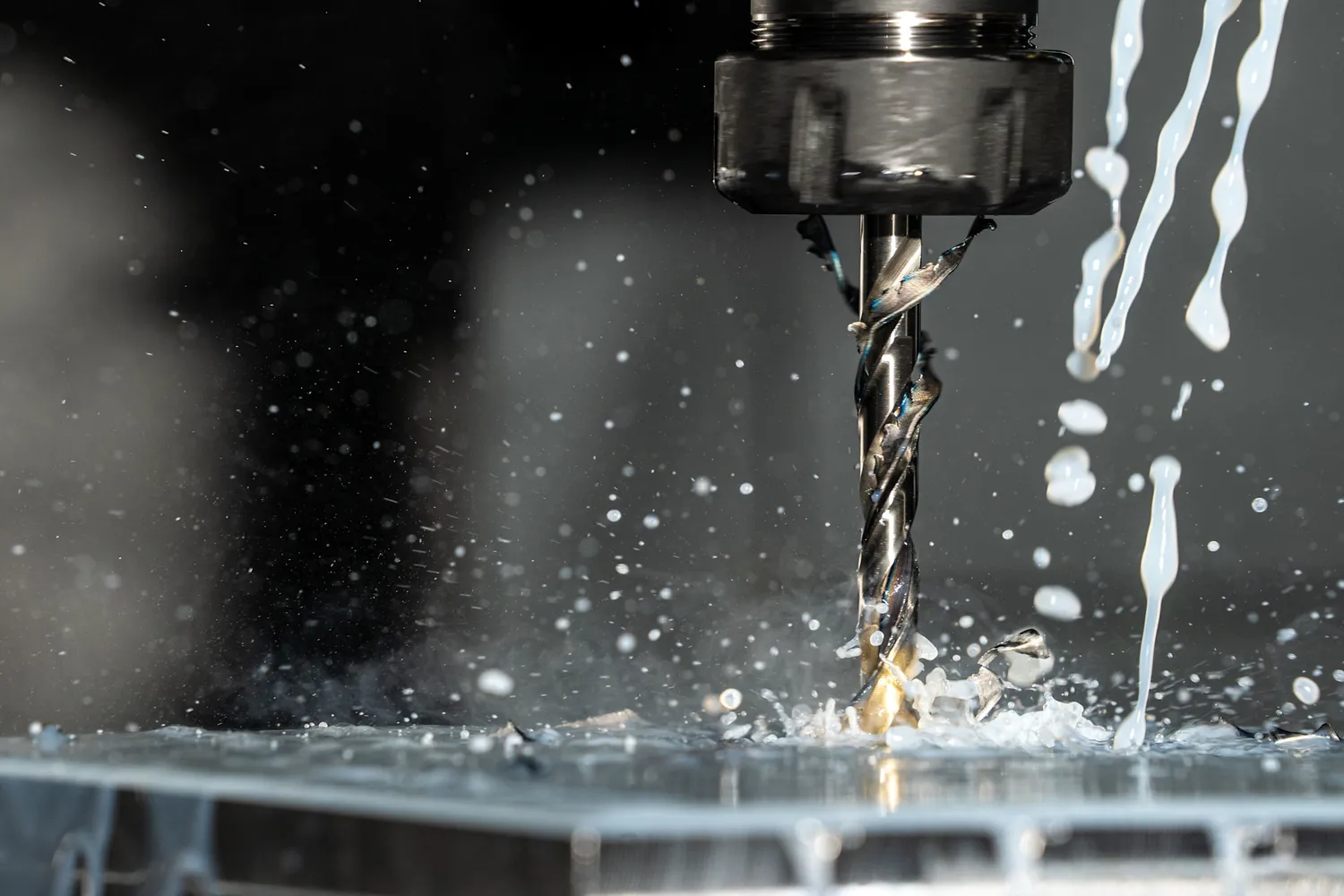
The “Cold Monday” effect: thermal drift of machines and measuring instruments in SPC analysis
Thermal drift of CNC machines and measuring instruments after the weekend distorts the SPC chart and lowers Cpk. See how to recognise a cold Monday and prevent it.

Piotr Piorunkiewicz9 November 2026
Quality control
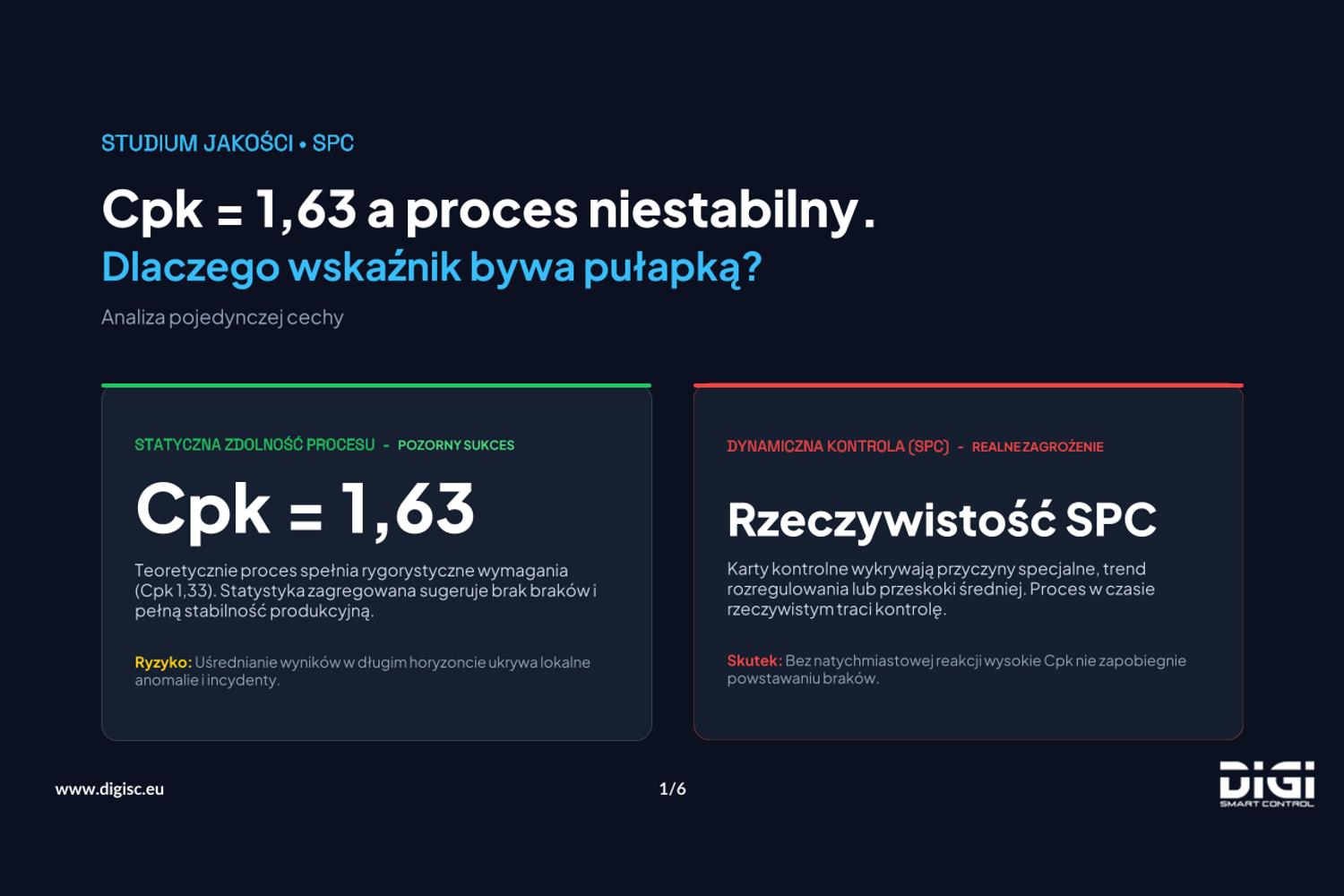
Cpk = 1.63, zero defects, and the auditor still rejects the process. Why?
A high Cpk for the whole month and a control chart that says “unstable”. Using one characteristic as an example, we show why stability comes first and capability second.
Piotr Piorunkiewicz18 October 2026

Production efficiency
What is OEE and why measure it at all?
OEE is a key measure behind the success of any manufacturing organisation. It focuses on measuring precisely how well the potential of machines and production lines is used, instead of relying on general observations and incomplete reports. OEE combines three pillars: Availability (how much time the machine really works), Performance (how fast it produces) and Quality (how many good parts it makes). This translates directly into identifying real losses, locating bottlenecks and supporting investment decisions. A high and stable OEE positions a plant as efficient, raises its profitability and translates directly into on-time delivery to the customer.
Piotr Piorunkiewicz14 November 2025
Quality control
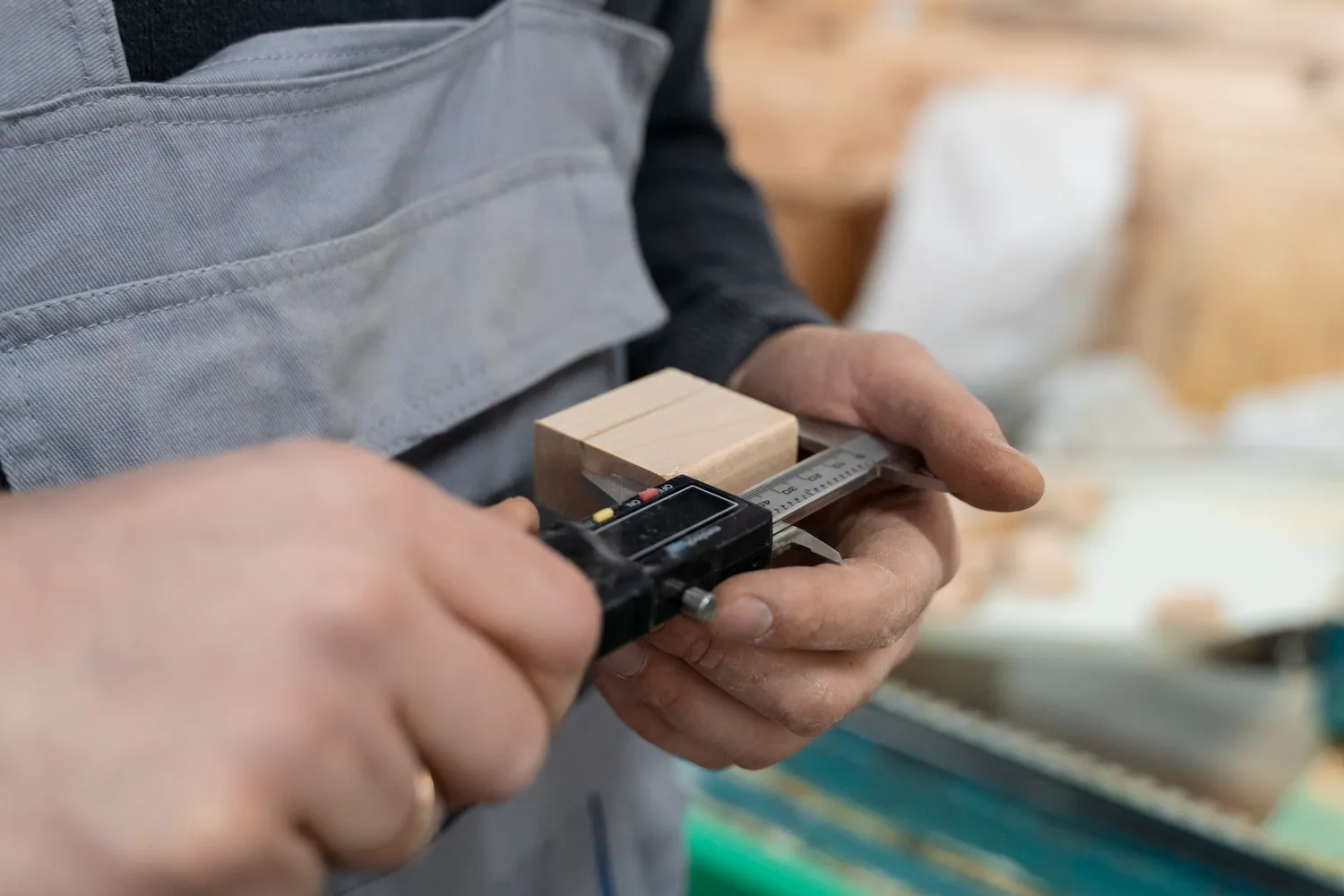
Why is it worth improving quality processes in a manufacturing company?
Quality is without doubt a key factor in the success of any organisation, especially one focused on manufacturing. There, quality control concentrates mainly on making sure the final product conforms to the technical requirements and to customer expectations. That translates directly into a lower risk of future complaints, returns and the cost of handling them. High, recognised product quality positions the brand, raises customer satisfaction and translates directly into the market share of the organisation.
Piotr Piorunkiewicz12 December 2024